
Why More Contractors Are Replacing Mixing Drills with Mixing Stations
Makinex
Oct 17, 2026, 9:35:47 AM
Every flooring installer knows the routine. Dump the bag, add the water, grab the drill, brace your knees and hang on. Then do it again. And again. By lunch your back is shot, there’s slurry on your boots, and the crew spreading the pour is standing around waiting on you.
The drill and bucket has been the go-to for decades because it’s cheap and it works. On bigger pours, though, it’s quietly costing you time and money. That’s why more contractors are switching to a dedicated mixing station.
On a small patch job, a drill is fine. The trouble starts when you’re pouring self-leveling underlayment across a few hundred square feet and need batch after batch, back to back.
Self-leveler doesn’t wait for anyone. Once it’s down, you’ve got a short window to keep a wet edge. If the next batch isn’t ready, you end up with seams and ridges you’ll be grinding out later. Mixing becomes the bottleneck, and the whole crew can only move as fast as the guy on the drill.
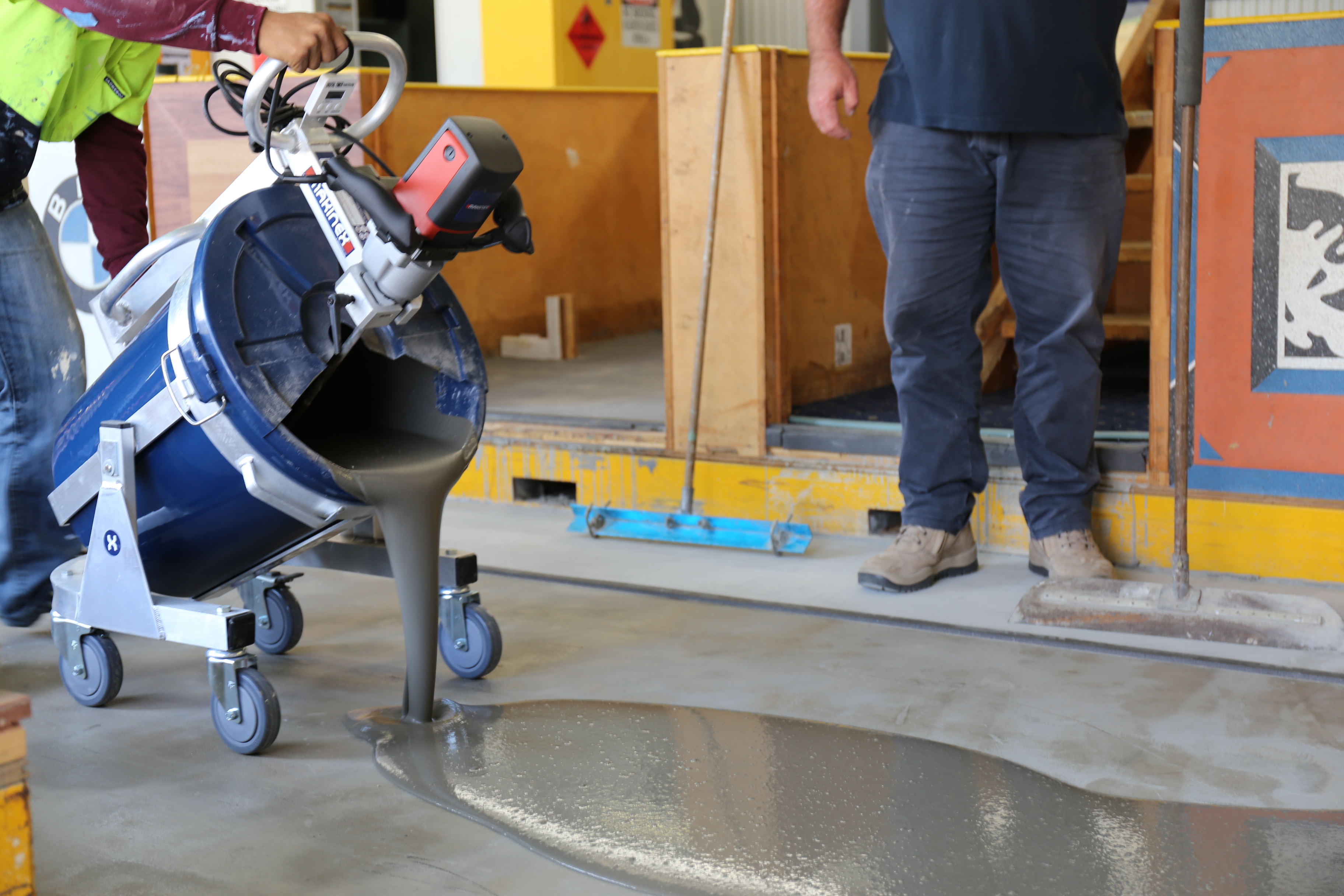
A mixing station holds the mixer and the tub for you. You load it, start it and step away. While it mixes, you’re free to prep the next bags, help the spreaders or check your levels.
When the batch is ready, you roll the station to where you need it and tilt to pour. Mixing, moving and pouring all happen from one machine, so there’s no lugging buckets across the slab.
It’s not a fancier drill. It takes the drill out of your hands.
The MS-100 was designed by contractors for contractors, specifically for self-leveling cements, compounds and epoxies. Here’s what it brings to the job:
On larger pours (around 860 sq ft and up), running more than one station keeps material flowing without gaps.
“With the Makinex Mixing Station an 8 hour job was finished in 2½ hours with one less staff member than I would usually use. The Makinex Mixing Station is a definite goer for this industry.”
John McKenzie, Ideal Floor Topping
Not entirely. Keep it for touch-ups and small mixes. But if you’re pouring self-leveler regularly, ask yourself one question: how much time does your crew spend waiting on the next batch?
If the answer is “too much,” a mixing station will likely pay for itself faster than you’d expect in saved labor, more consistent mixes and fewer callbacks.
Ready to speed up your next pour? Check out the Makinex MS-100 Mixing Station